Electricity & Magnetism
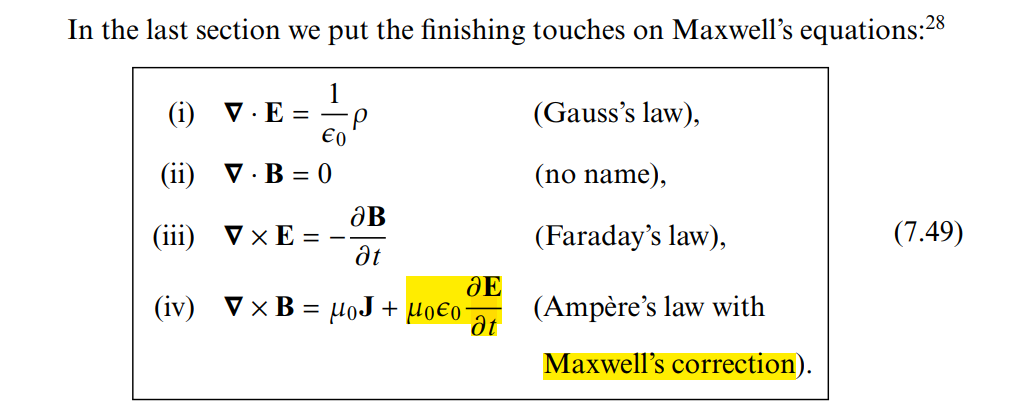
magnetic field (magnetic flux density, \(B\)), is the tesla (symbol: \(T\)), defined as one weber per square meter (\(Wb/m^2\))
Magnetic flux \(\Phi_B\) measures the total magnetic field (\(B\)) passing through a given surface area (\(A\)), representing the number of field lines penetrating that area. Measured in Webers (\(Wb\)),
Vector Calculus
3Blue1Brown, Divergence and curl: The language of Maxwell's equations, fluid flow, and more [https://youtu.be/rB83DpBJQsE]
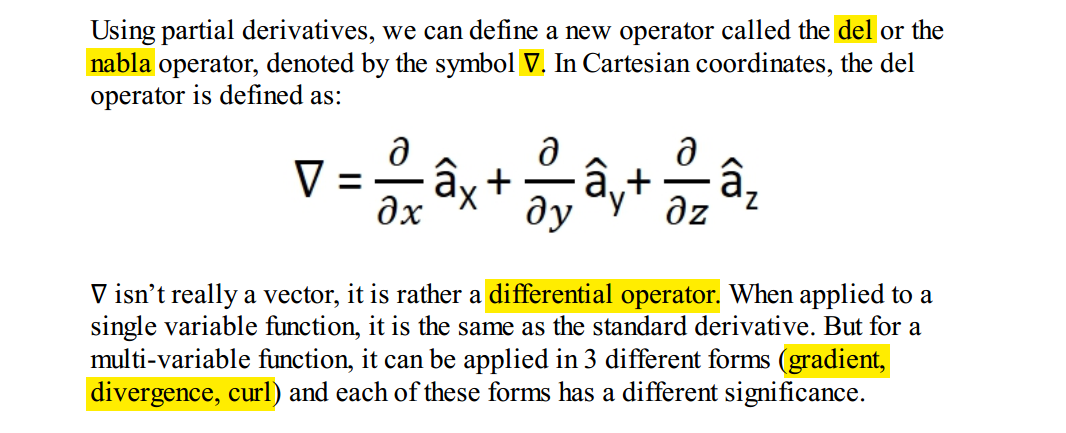
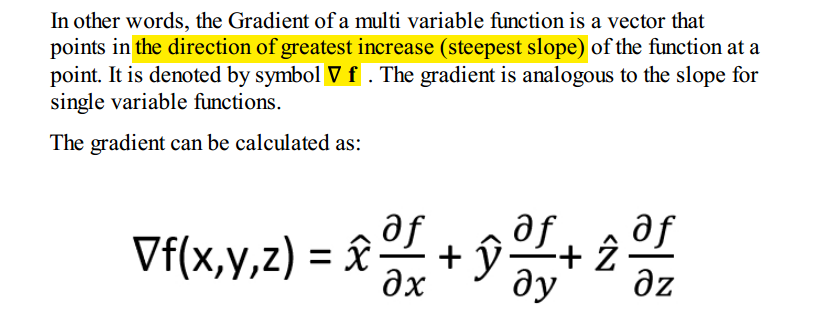
Gradient
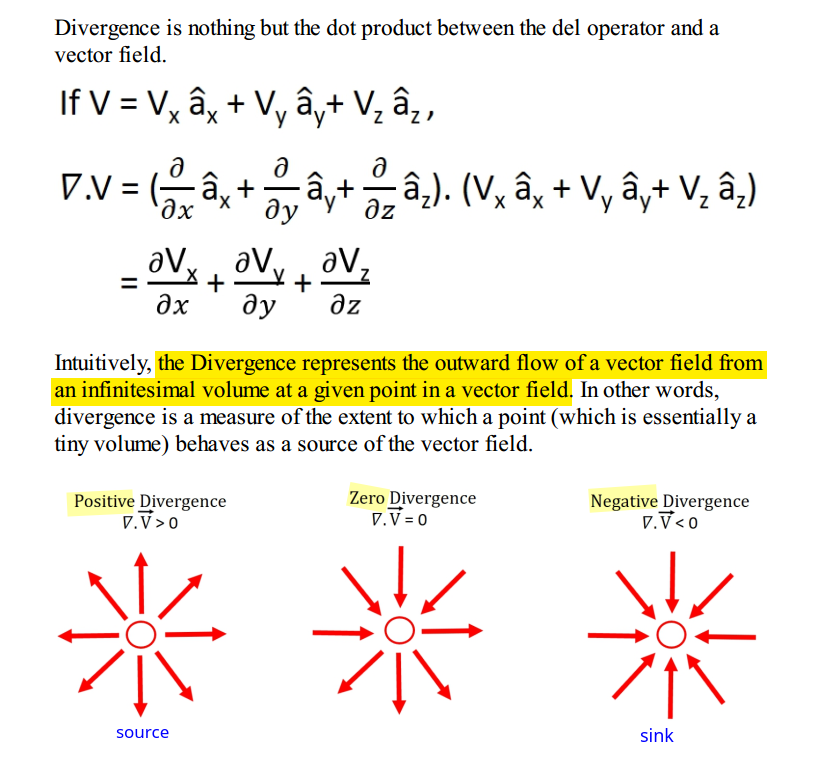
Divergence
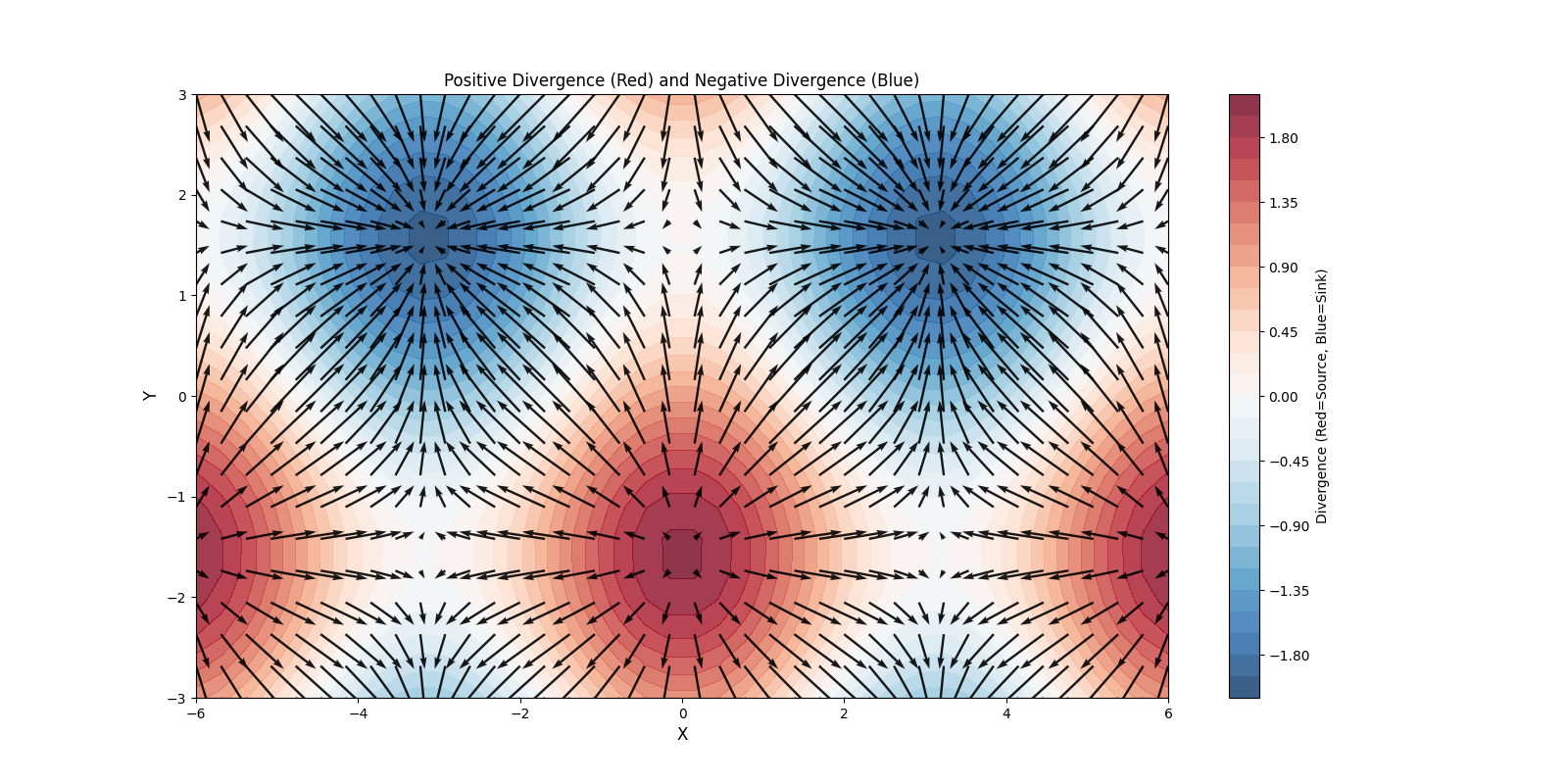
1 | # https://share.google/aimode/l3lNa2MRAOG8hkpOc |
Curl
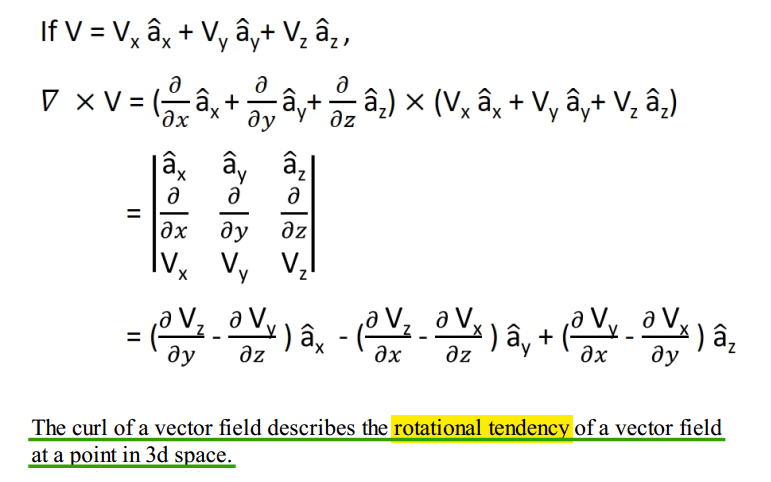
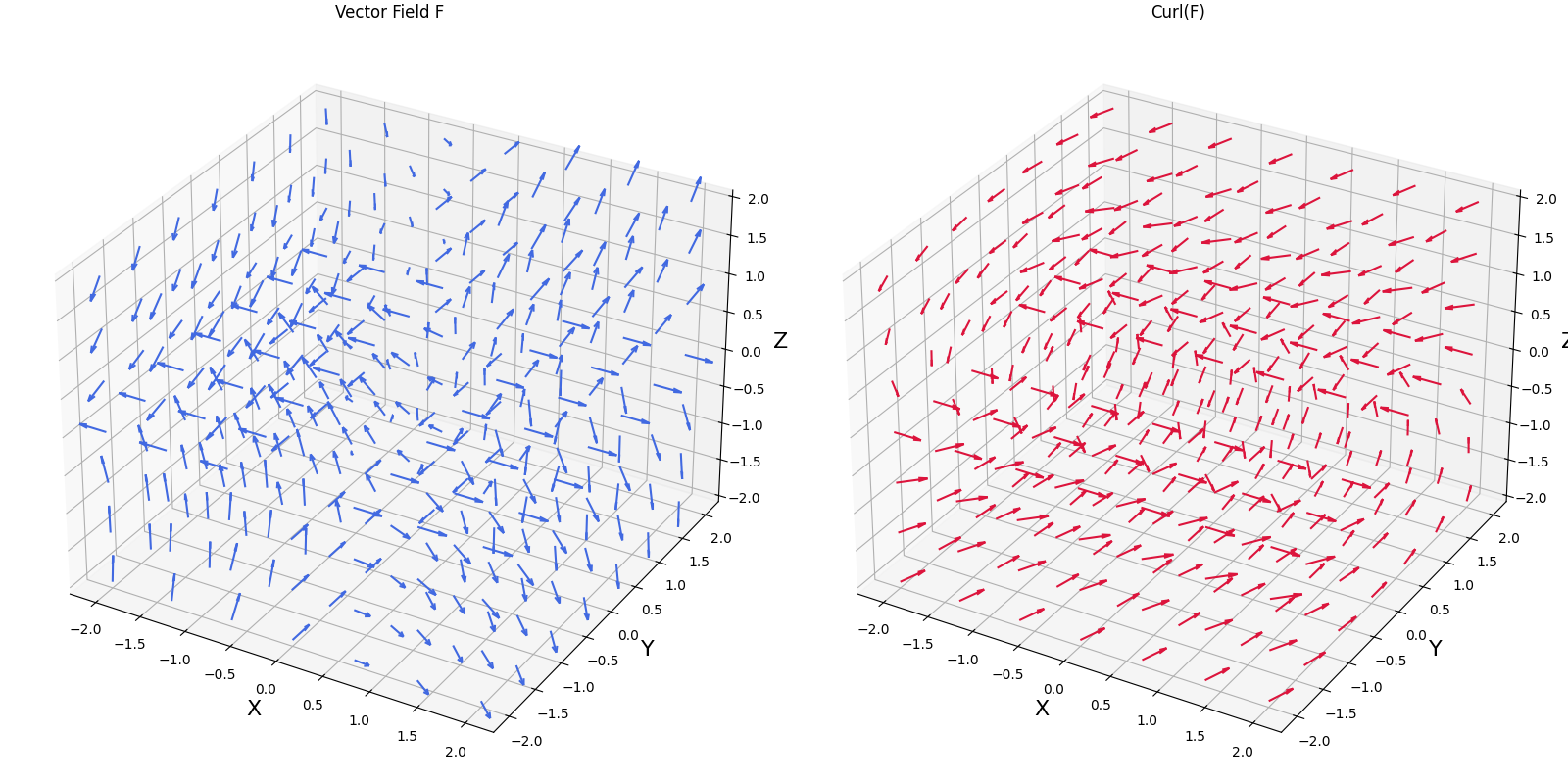
1 | # https://share.google/aimode/hWb3cR4vCBoWV4Moi |
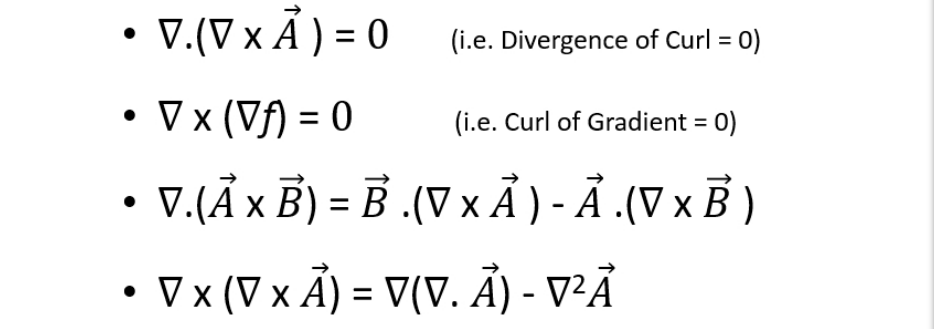
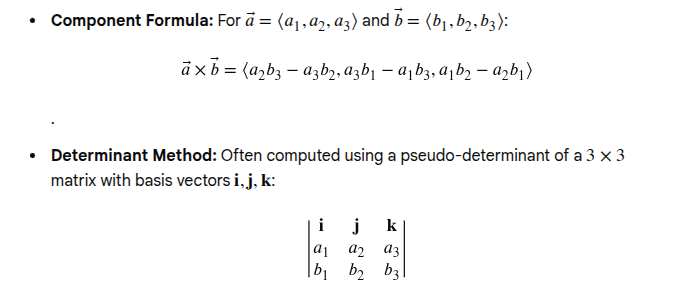
cross product [Google AI Mode]
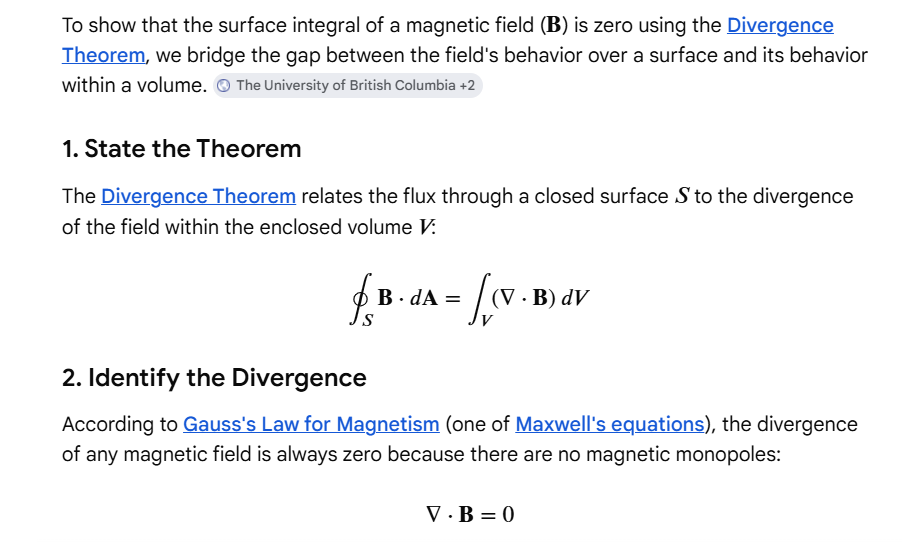
Divergence Theorem (Gauss's Theorem)
surface integral -> volume integral \[ \oint_S \vec{F} \cdot d\vec{S} = \int_V (\nabla \cdot \vec{F}) dv \]
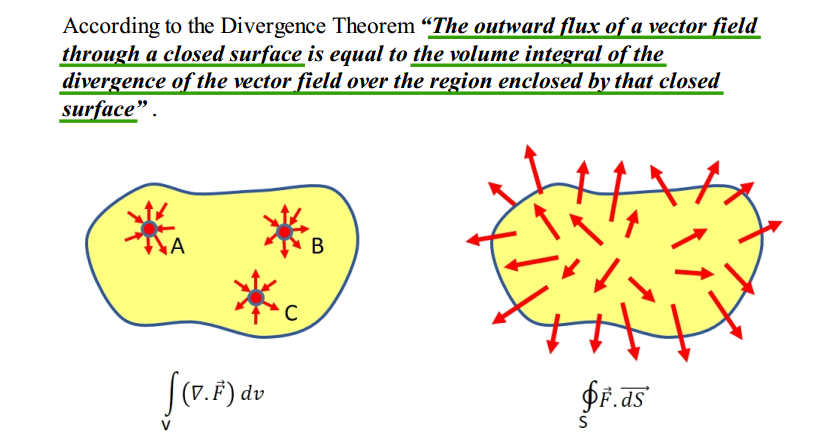
Divergence theorem is only applicable to closed surfaces

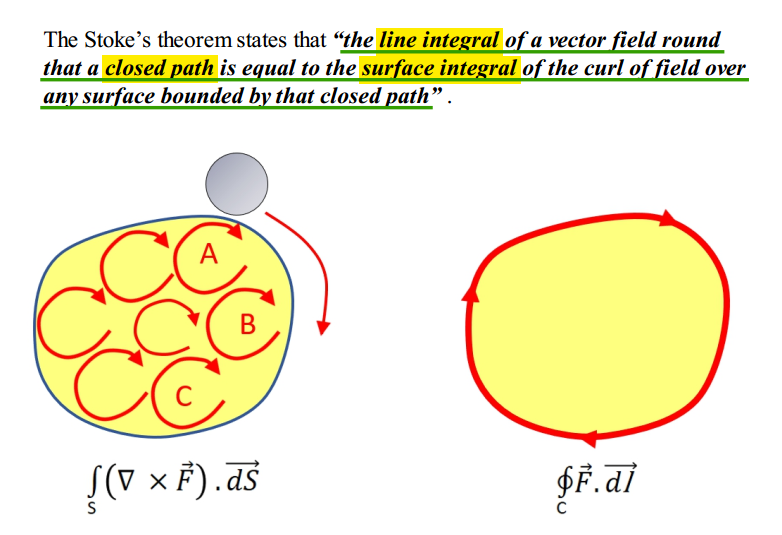
Stoke's theorem
line integral -> surface inegral \[ \oint_{c} \vec{F} \cdot \vec{dl} = \int_{s} (\nabla \times \vec{F}) \cdot \vec{dS} \]
Magnetostatics
Magnetostatics is the study of magnetic fields in systems where the currents are steady (not changing with time)

Magnetic Field Intensity(\(H\)) & Magnetic Flux Density(\(B\))
TODO 📅
Magnetic Potential
Magnetic Scalar Potential
TODO 📅
Magnetic Vector Potential
TODO 📅
Electrodynamics
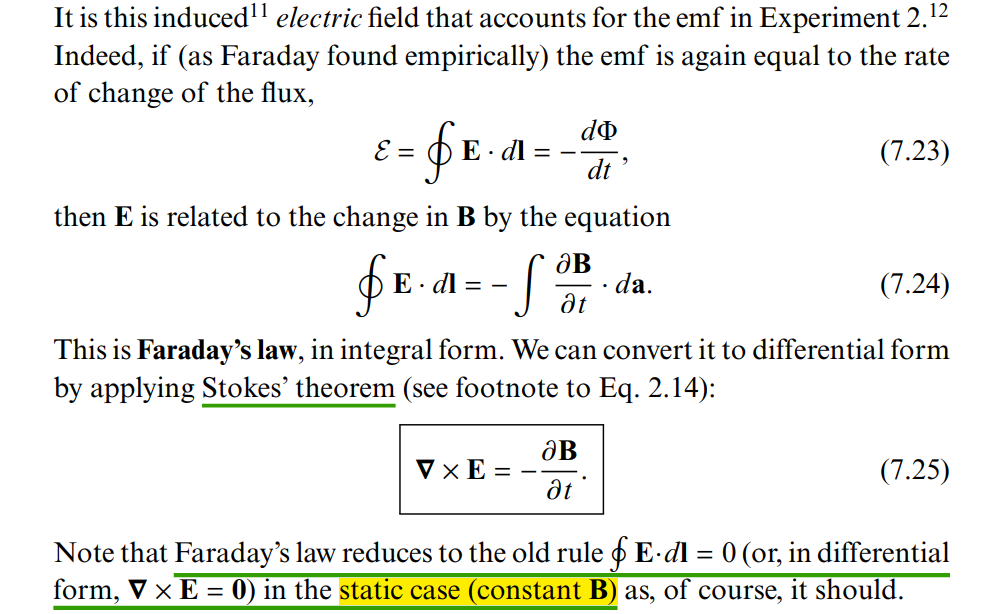
Faraday's Law
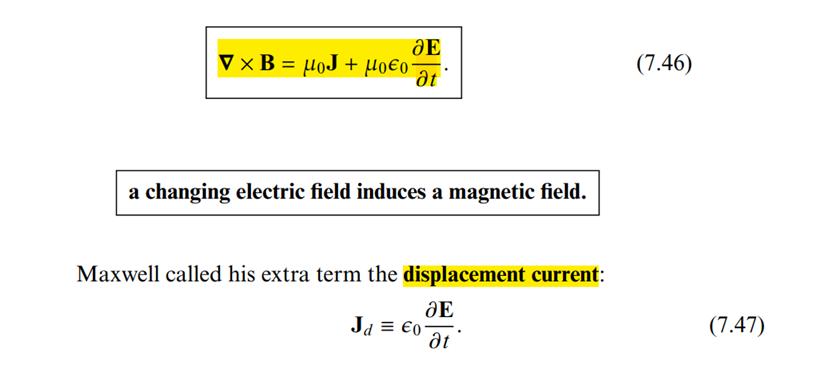
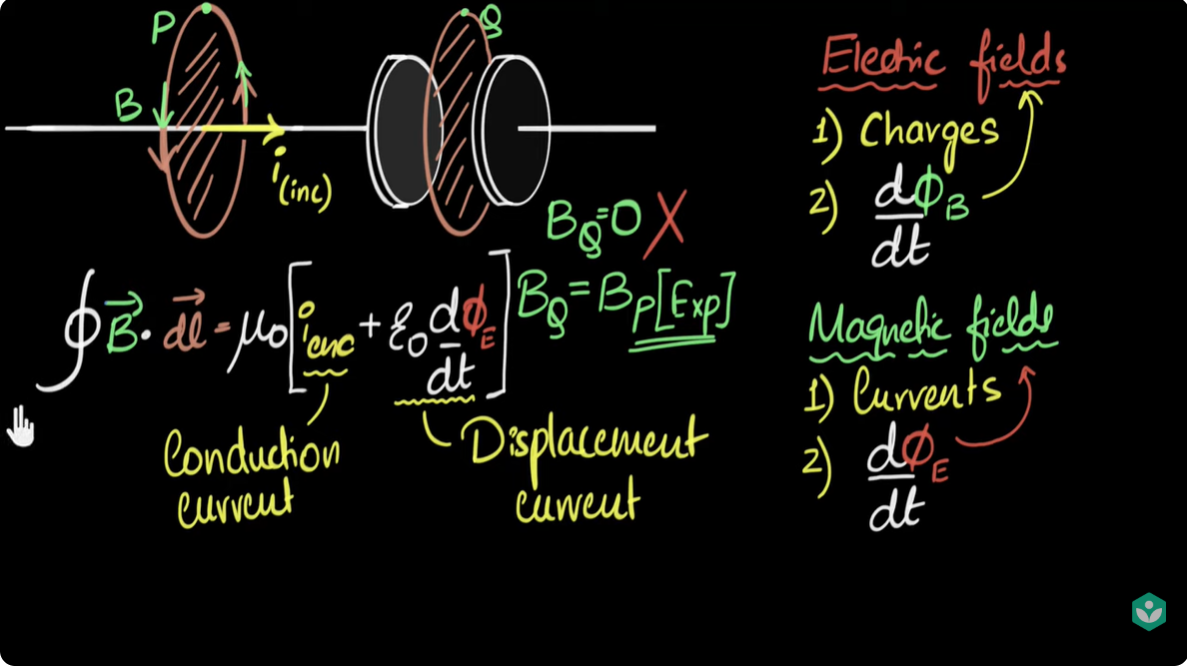
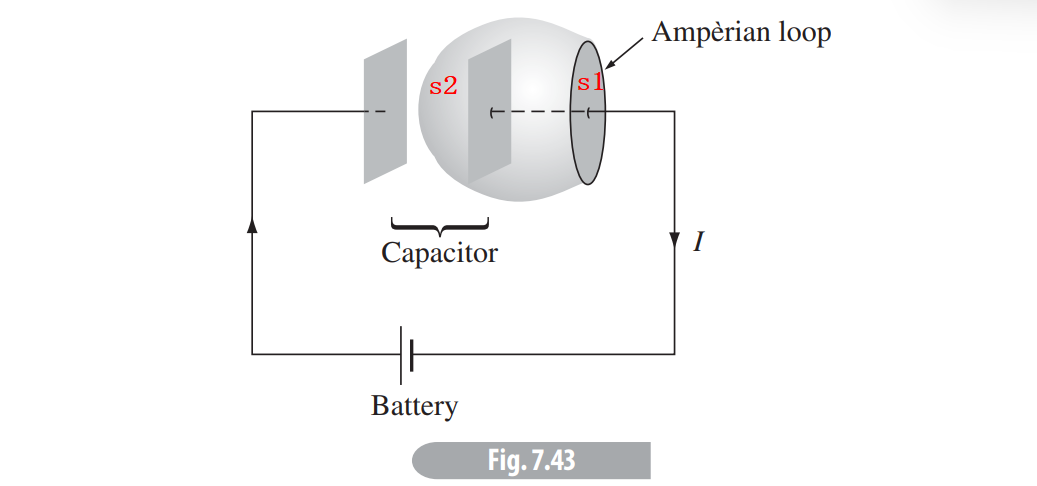
Ampère's law with Maxwell's correction
displacement current
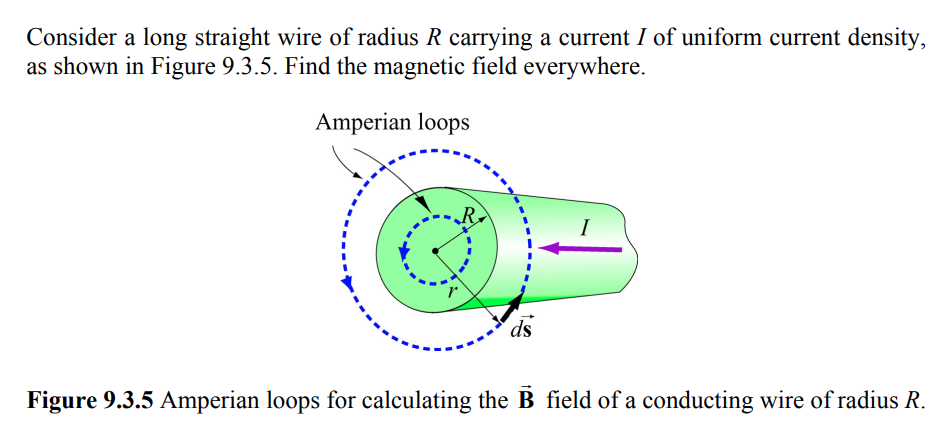
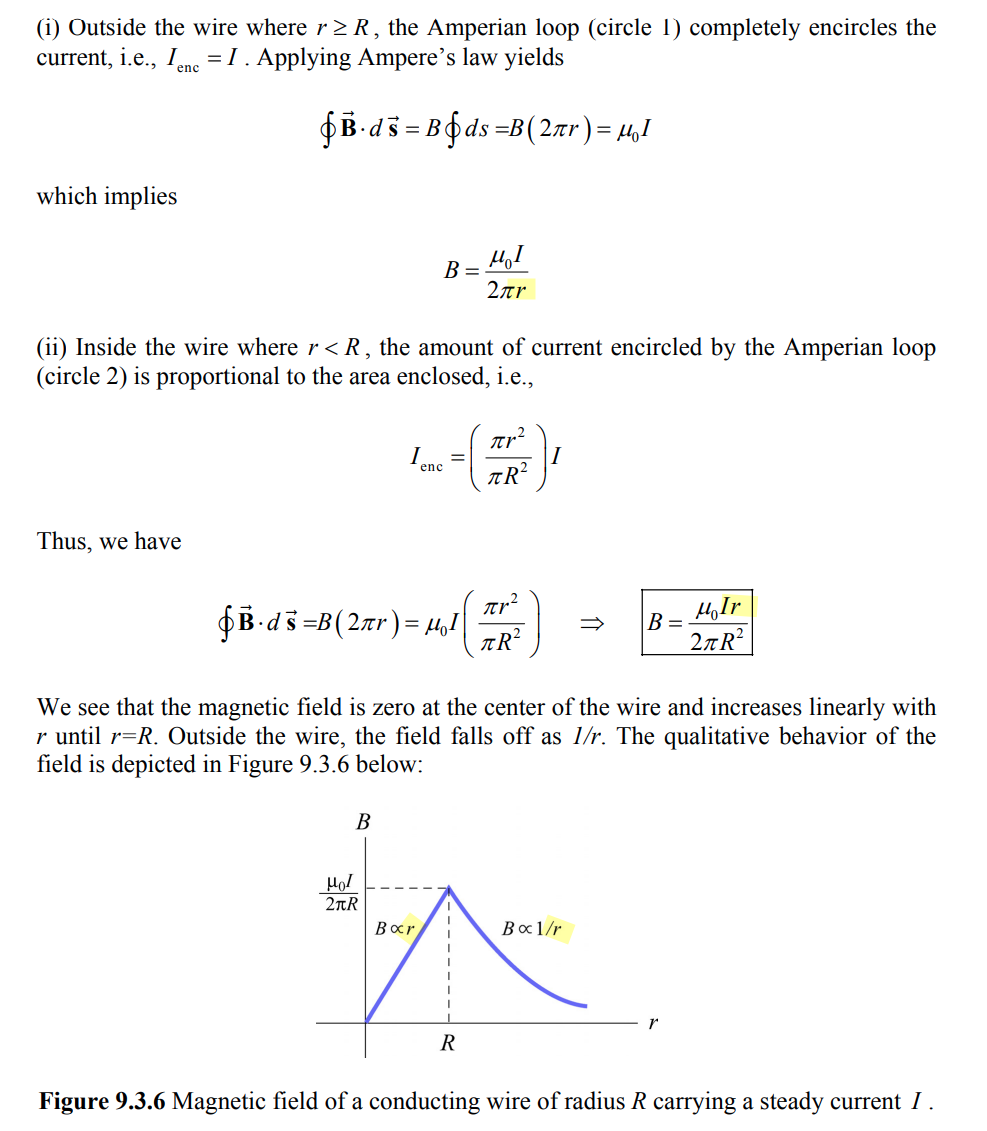
Field Inside and Outside a Current-Carrying Wire
Sources of Magnetic Fields [https://web.mit.edu/8.02t/www/802TEAL3D/visualizations/coursenotes/modules/guide09.pdf]
Displacement Current
A. Sheikholeslami, "Current Without Electrons [Circuit Intuitions]," in IEEE Solid-State Circuits Magazine, vol. 17, no. 4, pp. 8-10, Fall 2025
—, "Current Without Electric Field [Circuit Intuitions]," in IEEE Solid-State Circuits Magazine, vol. 18, no. 1, pp. 8-12, winter 2026
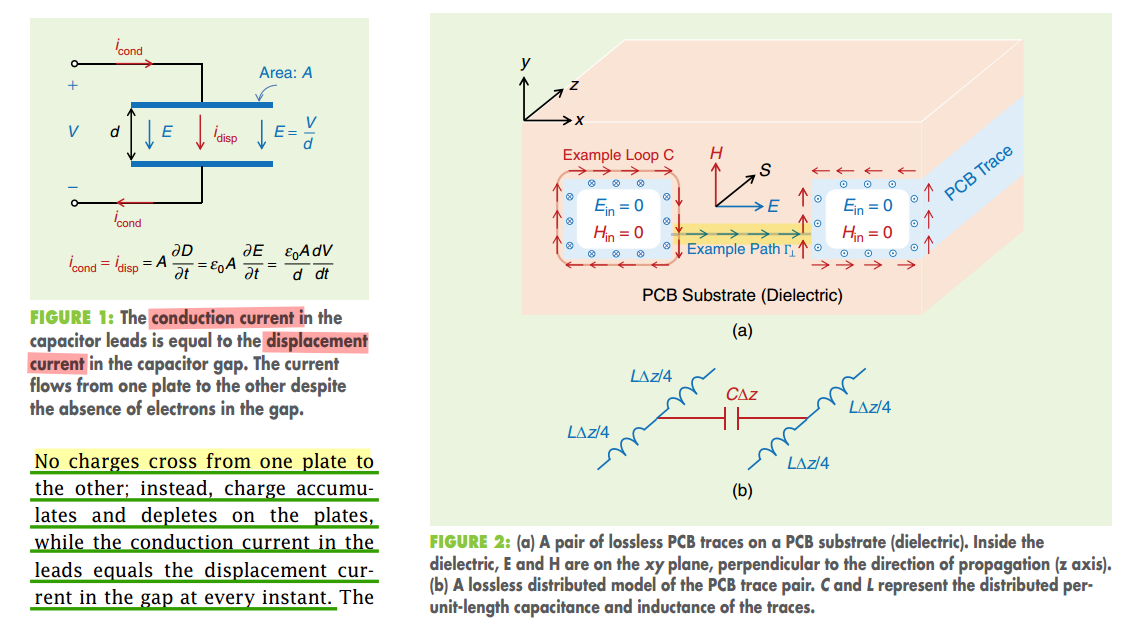
energy and information are carried by electric and magnetic fields (\(E\) and \(H\)) rather than by electron drift
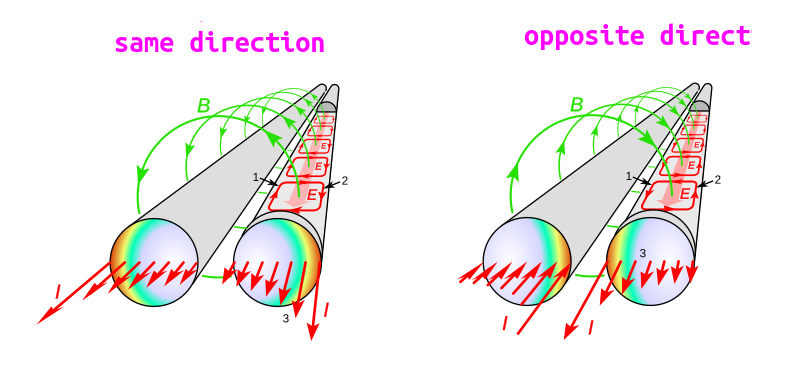
proximity effect & skin effect
- Skin effect concentrates current near the surface of a single conductor, while proximity effect concentrates current in specific regions of multiple conductors due to their interaction
- Skin effect is caused by the conductor's own magnetic field, while proximity effect is caused by the magnetic field of a nearby conductor
proximity effect is a redistribution of electric current occurring in nearby parallel electrical conductors carrying alternating current (AC), caused by magnetic effects (eddy currents)
skin effect is the tendency of AC current flow near the surface (or "skin") of a conductor, rather than throughout its cross-section, due to the magnetic field generated by the current itself
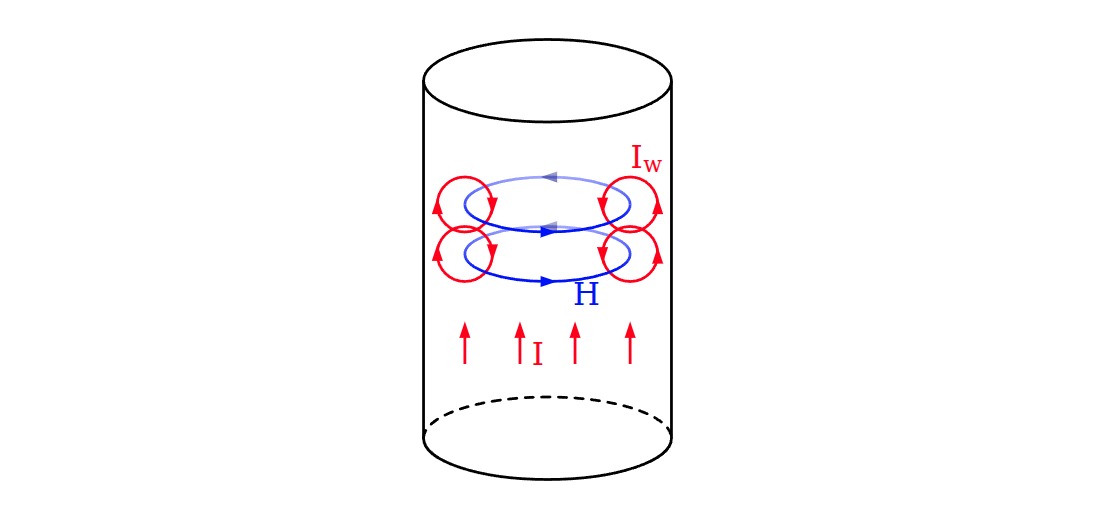
Cause of skin effect
A main current \(I\) flowing through a conductor induces a magnetic field \(H\). If the current increases, as in this figure, the resulting increase in \(H\) induces separate, circulating eddy currents \(I_W\) which partially cancel the current flow in the center and reinforce it near the skin
Eddy current
By Lenz's law, an eddy current creates a magnetic field that opposes the change in the magnetic field that created it, and thus eddy currents react back on the source of the magnetic field
Transformer
任何封闭电路中感应电动势大小,等于穿过这一电路磁通量的变化率。 \[ \epsilon = -\frac{d\Phi_B}{dt} \] 其中 \(\epsilon\)是电动势,单位为伏特
\(\Phi_B\)是通过电路的磁通量,单位为韦伯
电动势的方向(公式中的负号)由楞次定律决定
楞次定律: 由于磁通量的改变而产生的感应电流,其方向为抗拒磁通量改变的方向。
在回路中产生感应电动势的原因是由于通过回路平面的磁通量的变化,而不是磁通量本身,即使通过回路的磁通量很大,但只要它不随时间变化,回路中依然不会产生感应电动势。
自感电动势
当电流\(I\)随时间变化时,在线圈中产生的自感电动势为 \[ \epsilon = -L\frac{dI}{dt} \]
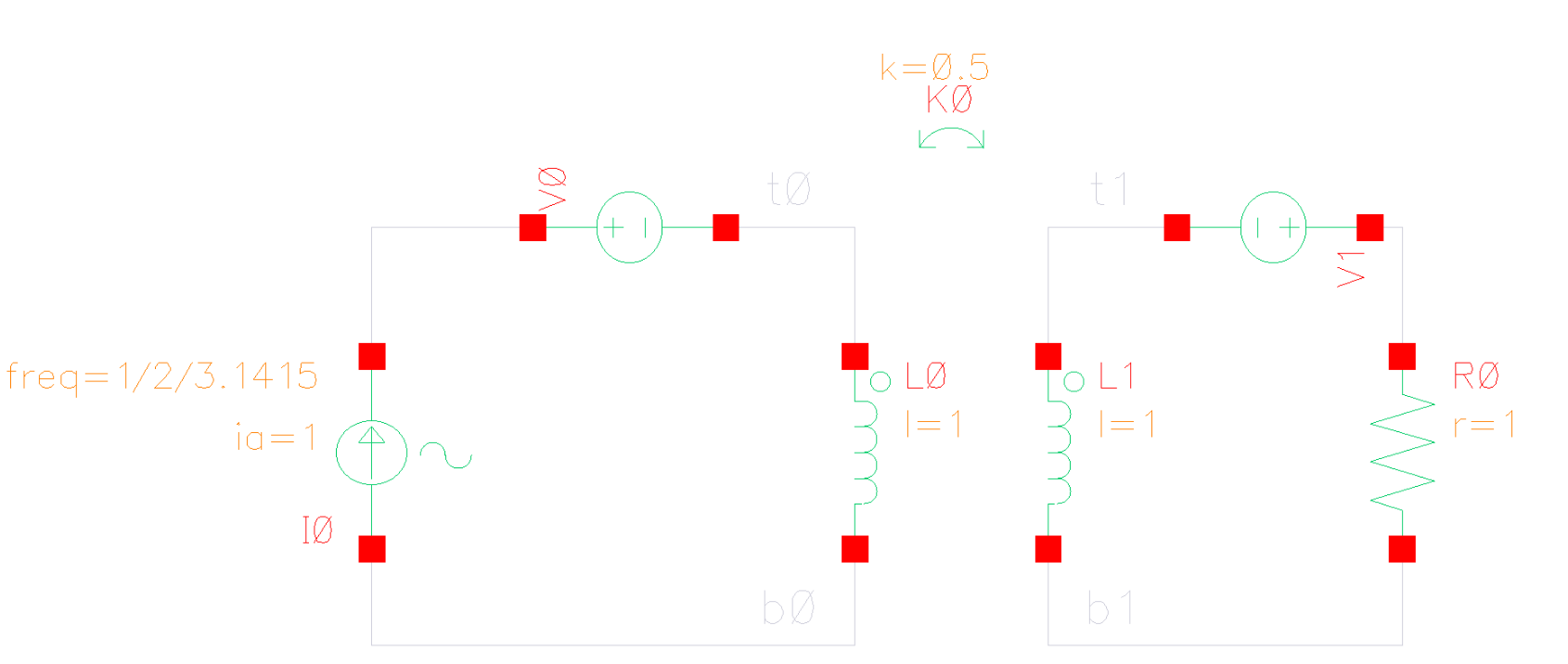
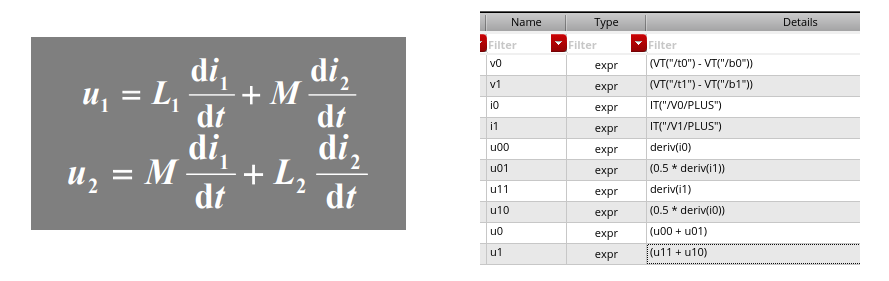
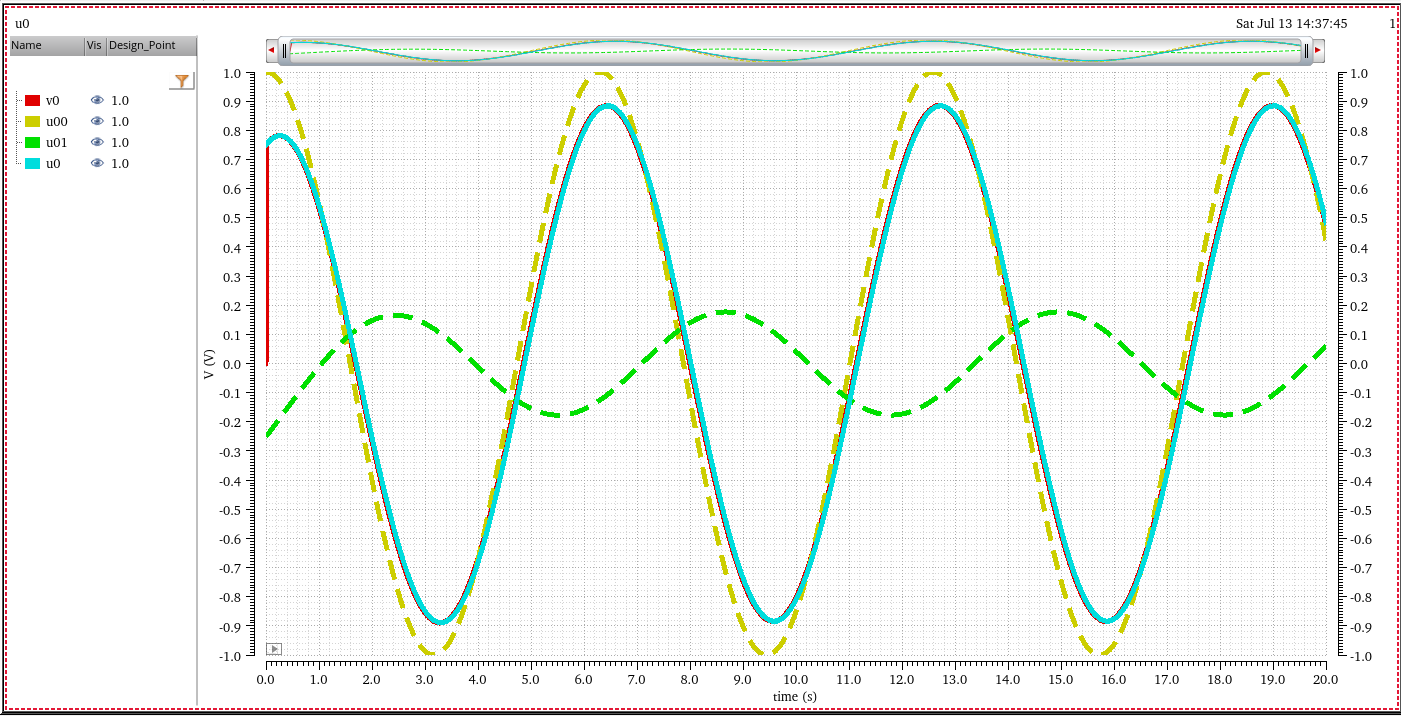
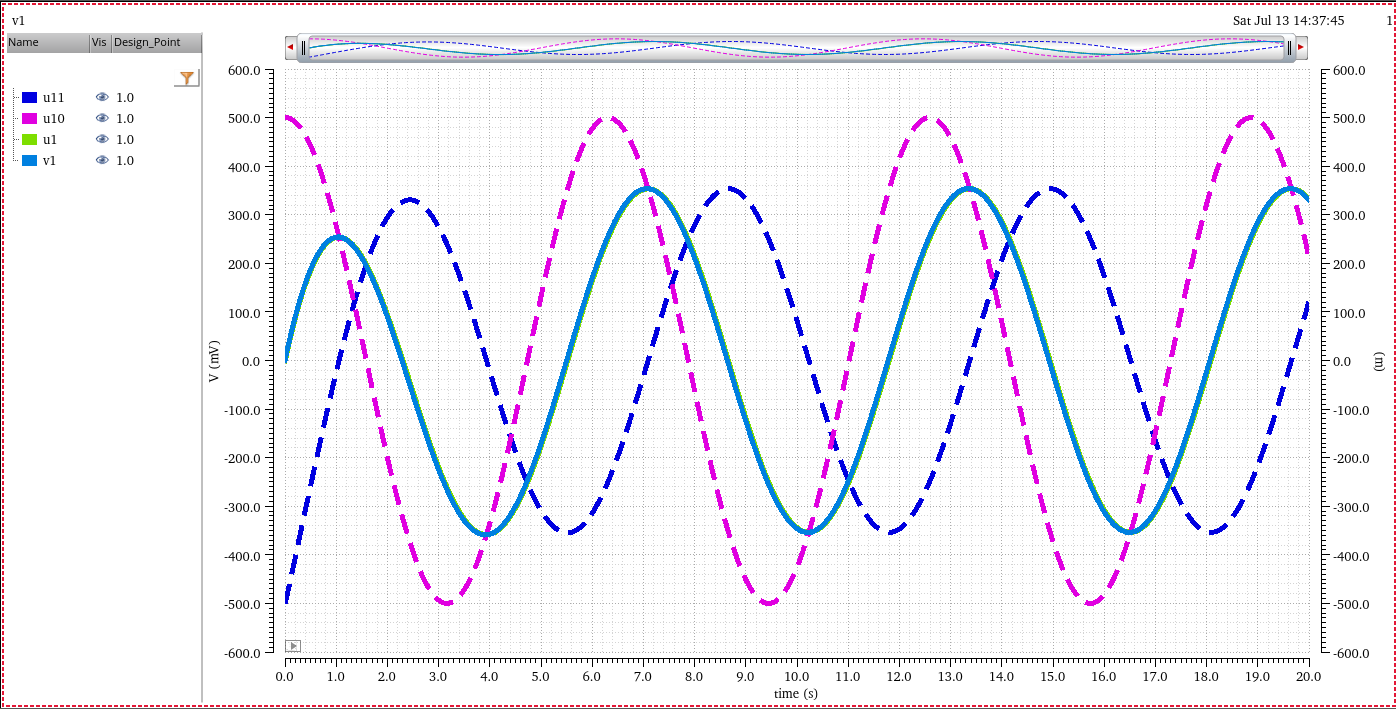
magnetic flux
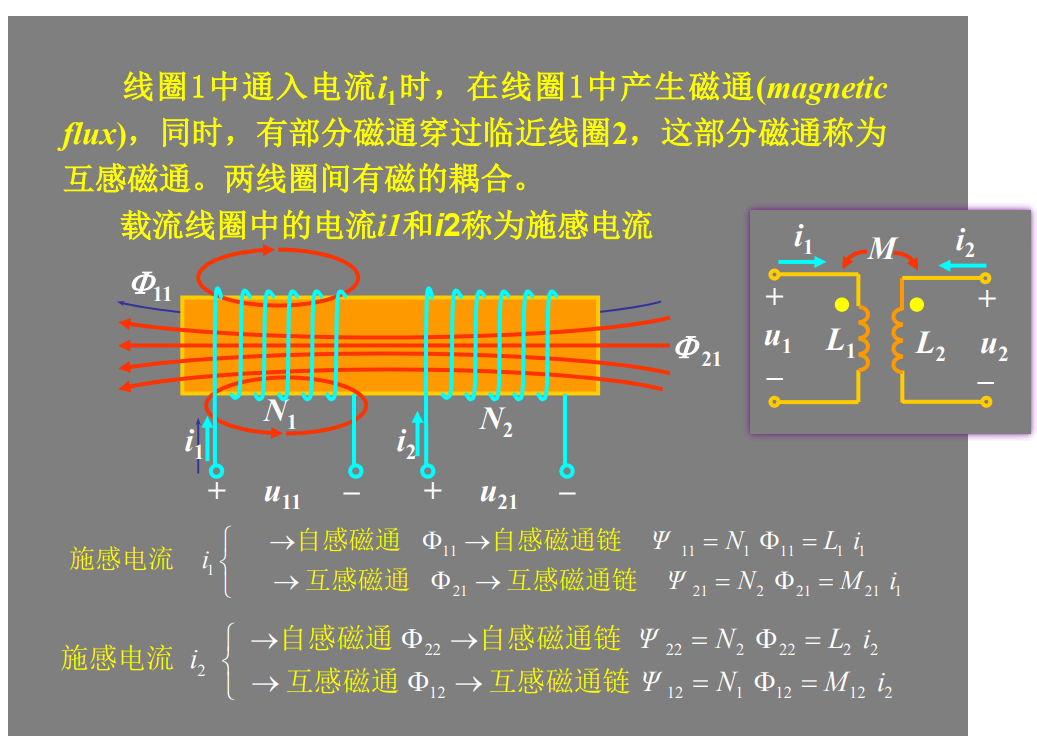
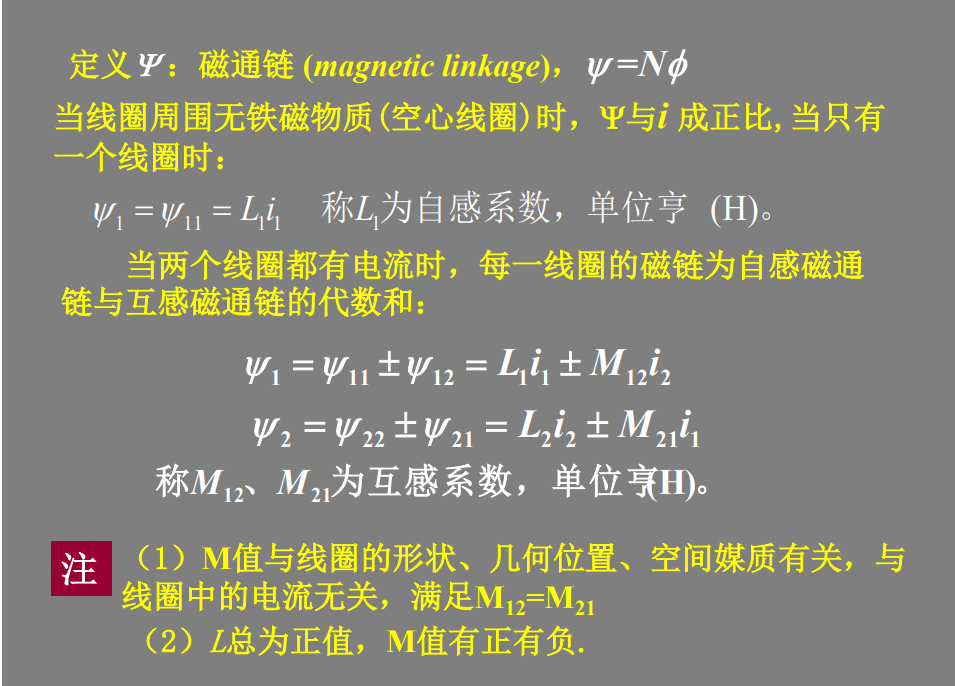
magnetic linkage
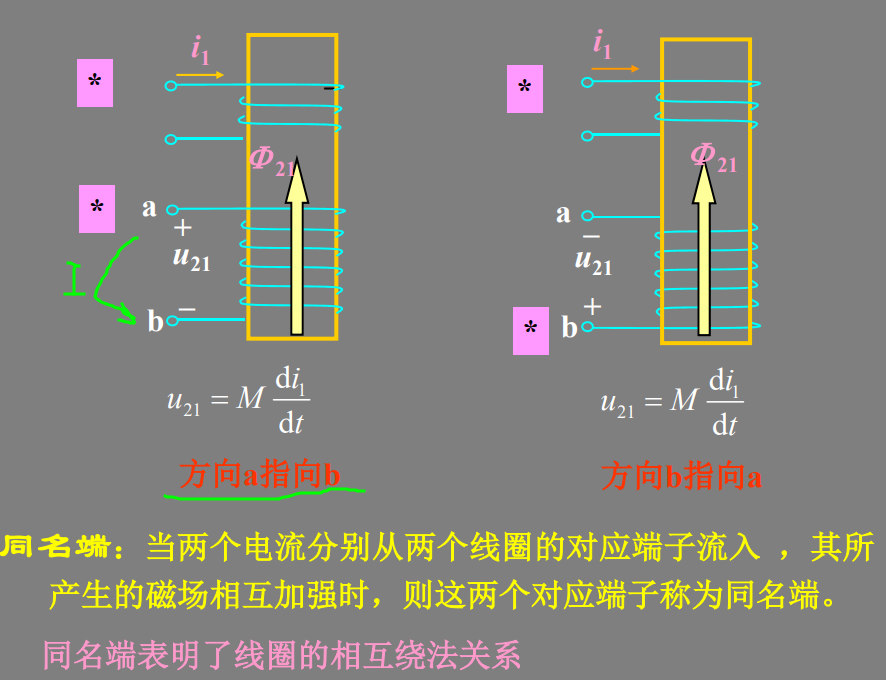
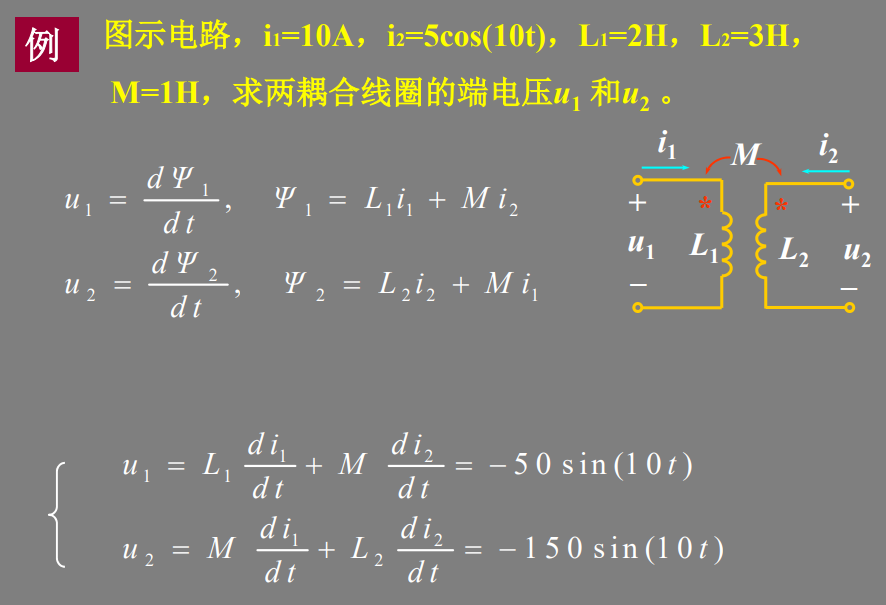
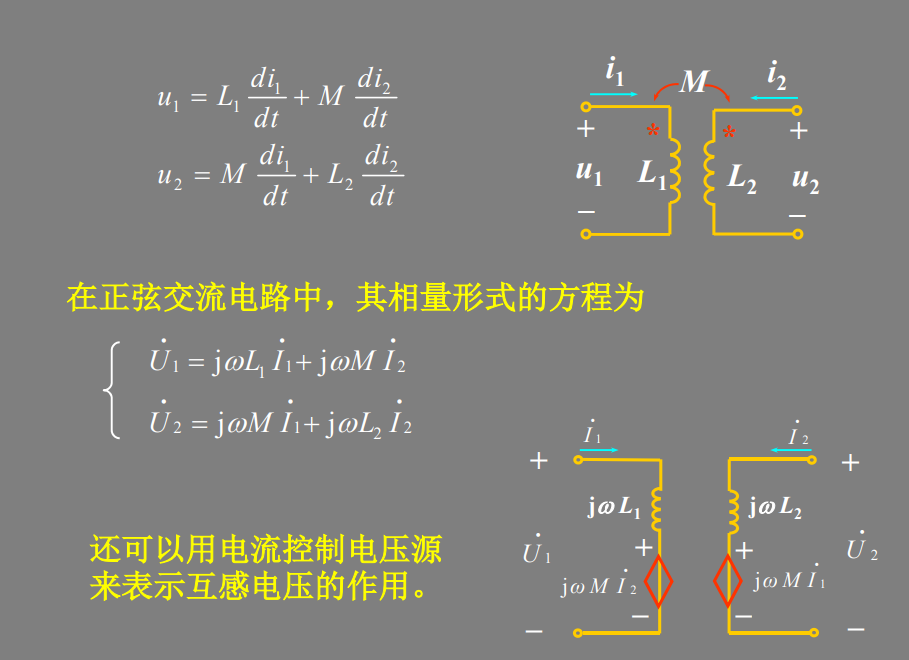
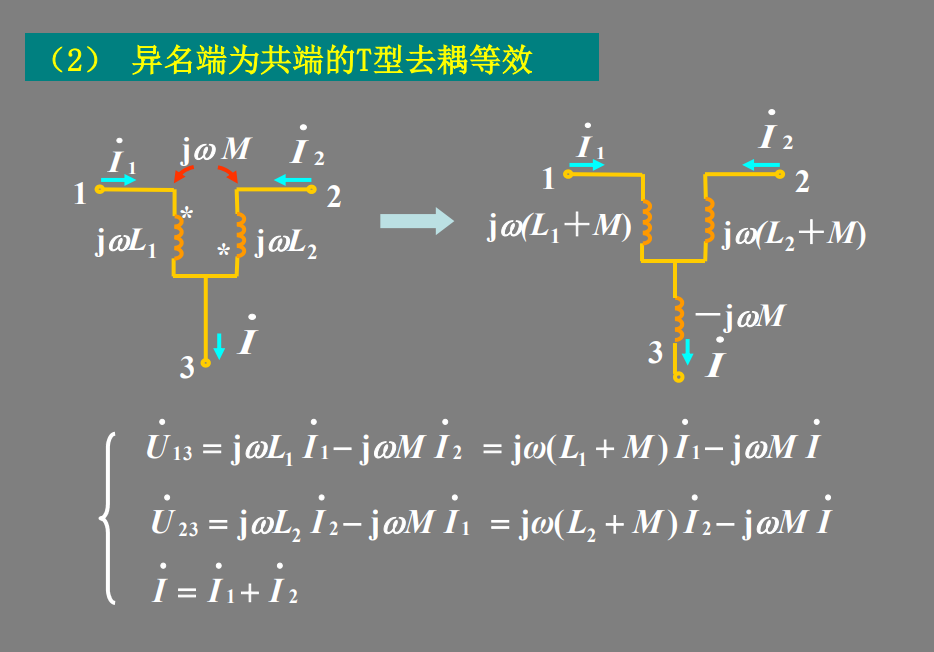
同名端:当两个电流分别从两个线圈的对应端子流入 ,其所 产生的磁场相互加强时,则这两个对应端子称为同名端。
reference
Griffiths, David J. Introduction to Electrodynamics. Fifth edition. Cambridge University Press, 2024. [pdf]
David Smith, Electromagnetic Theory for Complete Idiot, 2021
邓友金. 电磁学 2022春 [http://staff.ustc.edu.cn/~yjdeng/EM2022/EM2022.html]
谢处方、饶克谨、杨显清等.《电磁场与电磁波》(第五版),高等教育出. 版社,2019.
Scott Hughes. Spring 2005 8.022: Electricity & Magnetism [https://web.mit.edu/sahughes/www/8.022/]